During the past five months I have experienced lingering discomfort, low to moderate level pain associated with my upper right arm and shoulder.
OCTOBER
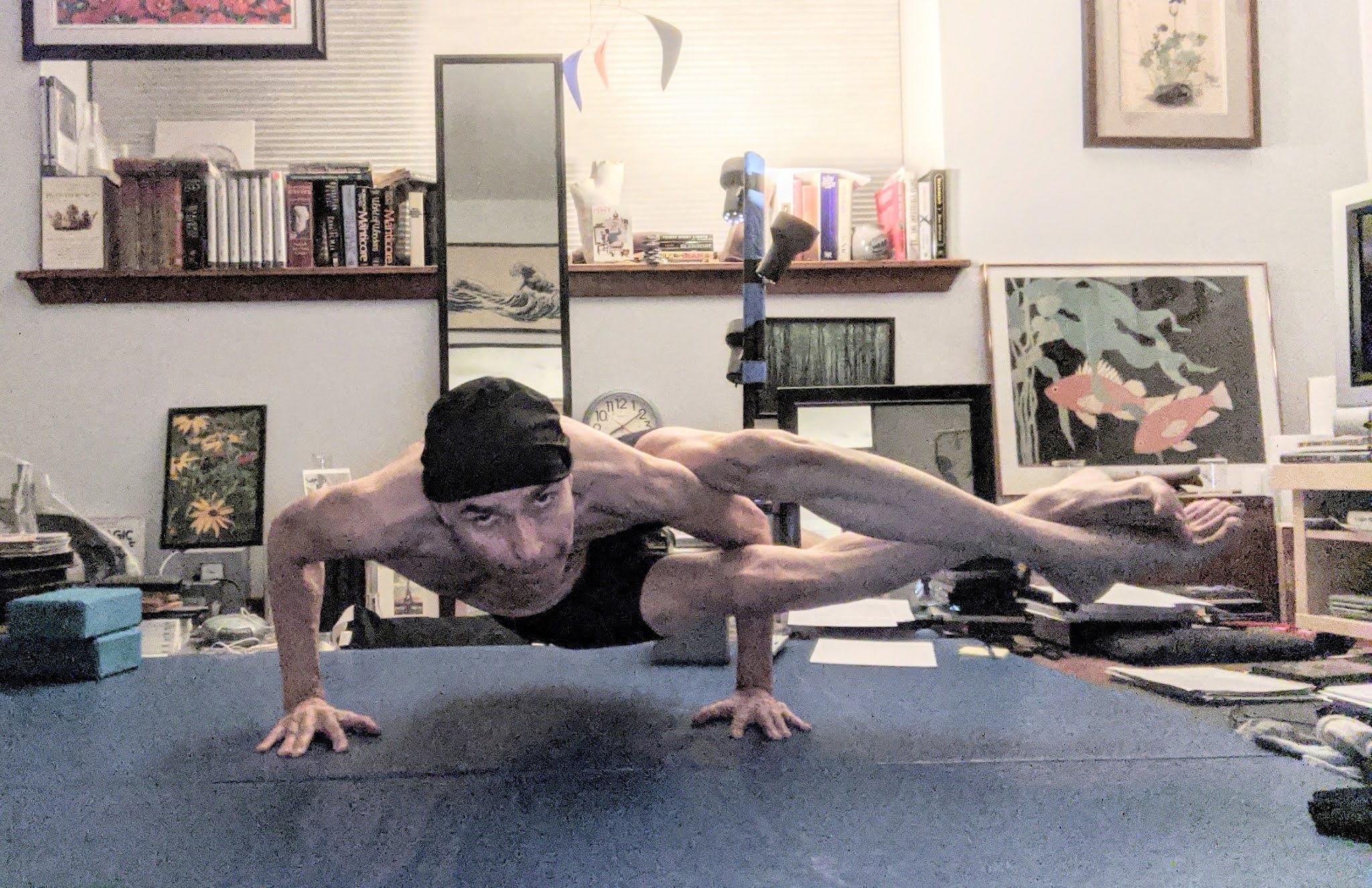
FIREFLY VARIATION

- circular arm rotations in both directions
- yoga strap motions from (a) abdominals to overhead to lower back, (b) doing Figure 8 movements in both directions
DECEMBER
As during the previous six weeks, I continued both daily yoga sessions and further modified the sequence of selected asanas.
Movements done easily over many years became limited: for example, in Gomukhasana -the clasping of hands behind my back with the right elbow moved towards a vertical position; in a standing forward shoulder asana - moving arms parallel to my yoga mat.
Not doing specific movements in some cases (see below) reduced the likelihood of possible arm, shoulder trauma.
ALSO
- Local walks wearing a heavy winter jacket with a hood led to increased pain in my neck and upper right arm
- Obtaining restful sleep became more difficult given the pain associated with my right arm and shoulder.
On December 21st I contacted Dr. Faucher: providing an update on my status and asked about obtaining a referral to have imaging on my upper right arm.
X-Rays of my right humerus (2 views) and right shoulder (3 views) were taken at St. Vincent Hospital on December 22nd.
At my request, I was able to obtain a copy of the Radiologist report shared below:
FINDINGS
- Osseous mineralization and alignment are normal
- There is no evidence of fracture or dislocation
- There are mild degenerative changes to the right acromioclavicular joint
- The right glenohumeral joint is well-preserved
- Images soft tissues are unremarkable
- Visualized lung parenchyma is clear
JANUARY
After reading the comments prepared by the Radiologist, my request for a referral to see a physical therapist (PT) was approved leading to a first session on January 19th.
As during the last week in December, experiencing pain at night in my upper right arm made sleeping difficult, at times impossible.
Uncomfortable pain in my right upper arm, neck at times continued while walking - the pain became worse when I walked with hands in my coat pockets.
INITAL
PHYSICAL THERAPY
MEETINGS
I first met PT Jennifer Dietz, affiliated with St. Vincent Hospital Grove Medical Associates in Auburn, MA.
Also evaluated were muscle strength and weakness in various positions (standing, sitting prone).
I mentioned my long, decade plus active yoga practice and several movements I had been doing for years easily and safely that were now more restricted and a source of discomfort and pain.
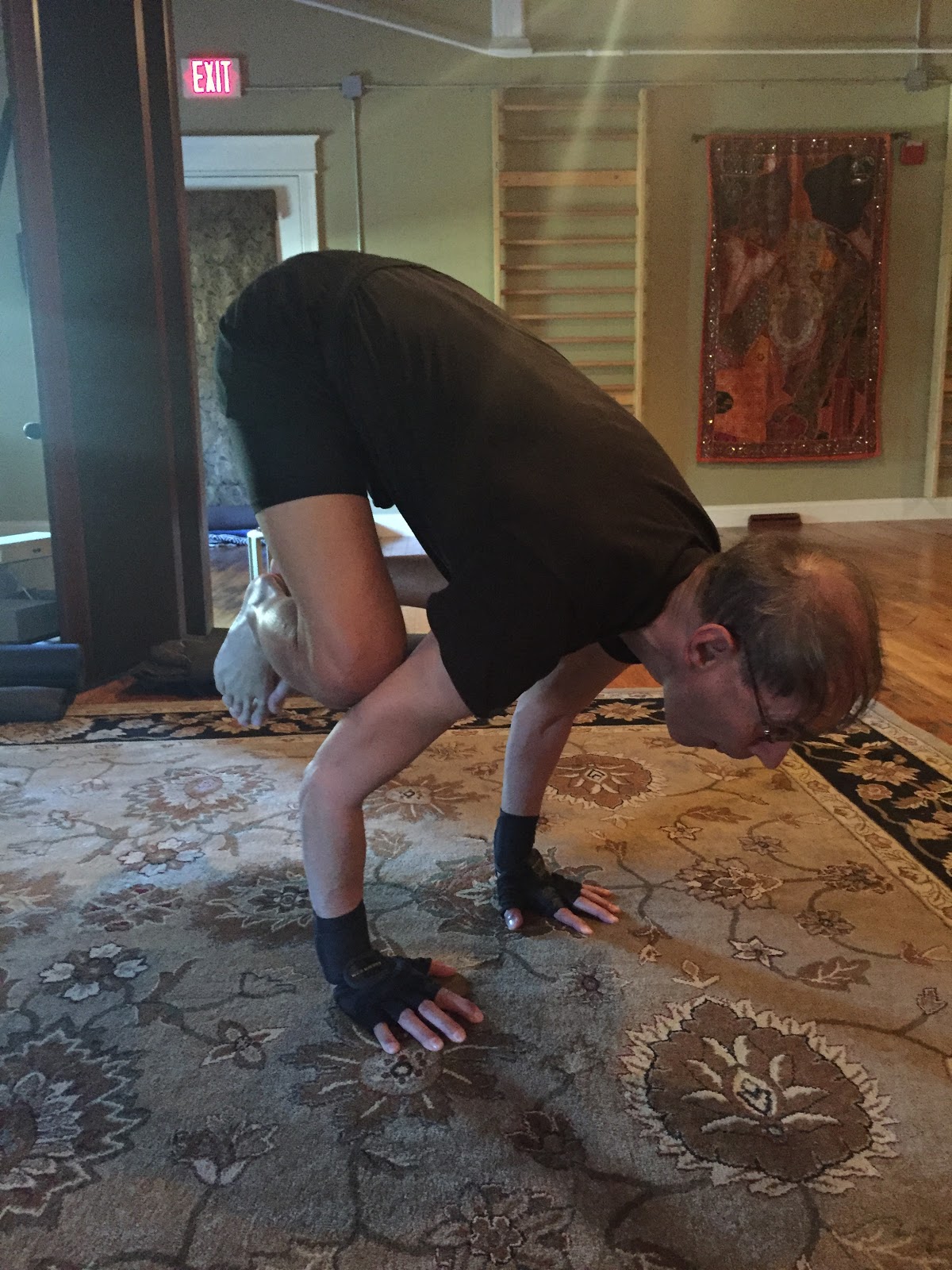
Two examples of compromised movements are shown below:
TORTOISE

REVOLVED
HAND FOOT ARM EXTENSION

BOTH INVOLVED
ABDUCTION
DEFINED
AS
MOVEMENTS
AWAY TO SIDE
FROM THE MIDLINE OF THE BODY
The supraspinatus, deltoid, trapezius and serratus anterior muscles are involved in arm abduction at different times.
Jennifer responded to my inquiries and suggested a shoulder impairment involving a rotator cuff muscle (supraspinatus) was a reasonable explanation for the referred pain experienced mostly in my upper right arm based on the assessments.
We also addressed issues with my posture as noted below.
BACKGROUND
For many years I referred to several yoga anatomy books, online articles and videos to obtain a better understanding of the biology related to my mobility.

Ray Long's book THE KEY MUSCLES OF YOGA was a useful reference source to visualize the complex association of the arm, shoulder joint: bones, ligaments, muscles and tendons along with excellent illustrations of diverse asanas.
THE SHOULDER GIRDLE
The shoulder girdle is compromised of the following structures (Long, p.17):
- Scapula (shoulder blade)
- Scapulothoracic joint
- Clavicle
- Sternoclavicular, Acromioclavicular joints
- Humerus (upper-arm bone)
- Glenohumeral joint
SIMPLIFIED ANATOMY
UPPER ARM, SHOULDER
&
SUPRASPINATUS

The above image is an enlarged view of the shoulder joint that highlights the supraspinatus muscle, tendon attachment to the humerus and relative positions of the joint bursa and the scapula (shoulder blade) projection known as the acromion.
SUPRRASPINATUS
(Long, p.175)
"This muscle originates from the back (dorsal) surface of the scapula and inserts on ... the humerus ..."
This muscle "initiates arm abduction"
'It is ... frequently injured, due to impingement of its tendon ... (by) the acromion process of the scapula."
IMPINGEMENT
(LONG, p. 184)
"The subacromial bursa is a sac-like, fluid-filled structure that facilitates the gliding of the rotator cuff under the acromion."
"Impingement involves compression of the subacromial bursa between (the supraspinatus tendon attachment) of the humerus and the acromion."
" This can result in shoulder pain."
It is likely the acromion has been causing inflammation to the bursa, tendon of supraspinatus.
ROLE OF POSTURE
Jennifer and I also spoke about my compromised posture, the forward position of shoulders resulting in 'rounded shoulders' - a condition I have been aware of for many years.
I mentioned a suspicion of the reconstructive thoracic surgery (pectus excavatum) in June, 2001 to address a debilitating structural deformity compromising breathing may have contributed to this poor posture.
Our conversations noted the difference between the greater muscle strength of my chest (pectoralis major, minor) and weaker back muscles.
Use of a shoulder harness as a reminder to adjust posture was discussed and considered an reasonable option.
Walking with a lighter jacket, with shoulders upright and arms at sides significantly decreased my neck, right arm referred pain.
😊
MOVEMENTS

A 65 cm exercise ball, a long foam roller, various sized yoga blocks, a yoga strap, wrist supports, an abdominal/back support belt, sandbags, several elastic bands of different resistance, two pound dumbbells and a tennis ball were some of the props I have used for years, recently to address my whole body mobility.